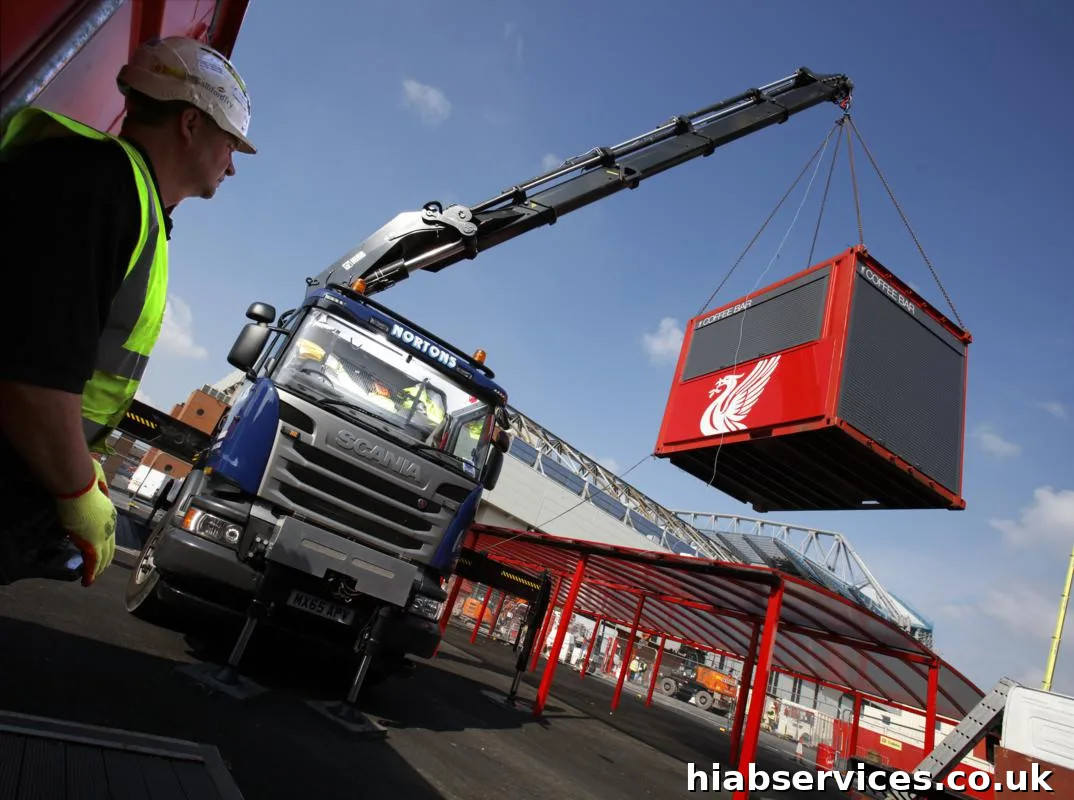
The right HIAB depends on load weight, lift radius, vehicle access, payload volume and site conditions. Answer these five questions and you will know exactly what to book.
Booking the wrong HIAB — either too small and unable to complete the lift, or oversized and unable to access the site — wastes everyone's time. This guide gives you a simple framework for specifying the right vehicle.
Get as accurate a weight as possible. If you cannot weigh the load, use manufacturer specifications or shipping documentation. For building materials, your supplier can provide pallet or unit weights. Always round up rather than down when estimating — it is safer and avoids the crane operator having to refuse the lift on site.
This is the lift radius and it is the most commonly overlooked variable. If the truck can park 2 metres from the lift point, a smaller crane is fine. If the truck must stay on the road while placing the load 10 metres away, you need a significantly larger crane. Sketch a rough plan of the site and mark where the truck will need to park.
Measure your access — gate width, overhead cables, track width, surface condition, weight restrictions. This determines the maximum vehicle size and informs the crane specification within that constraint.
If you are moving a single heavy item, a rigid HIAB with a well-specified crane may be all you need. If you need a crane at the delivery end but also want to transport a large volume of materials, a wagon and drag or artic with HIAB gives more deck space.
Overhead power lines, sloping ground, soft or wet ground, proximity to structures, works over a public highway — all affect the lift plan and may require specialist rigging or a larger crane to maintain safe working loads with adequate margin.
Call us with your answers on 0330 175 8197 and we will match the right vehicle from our fleet to your job.
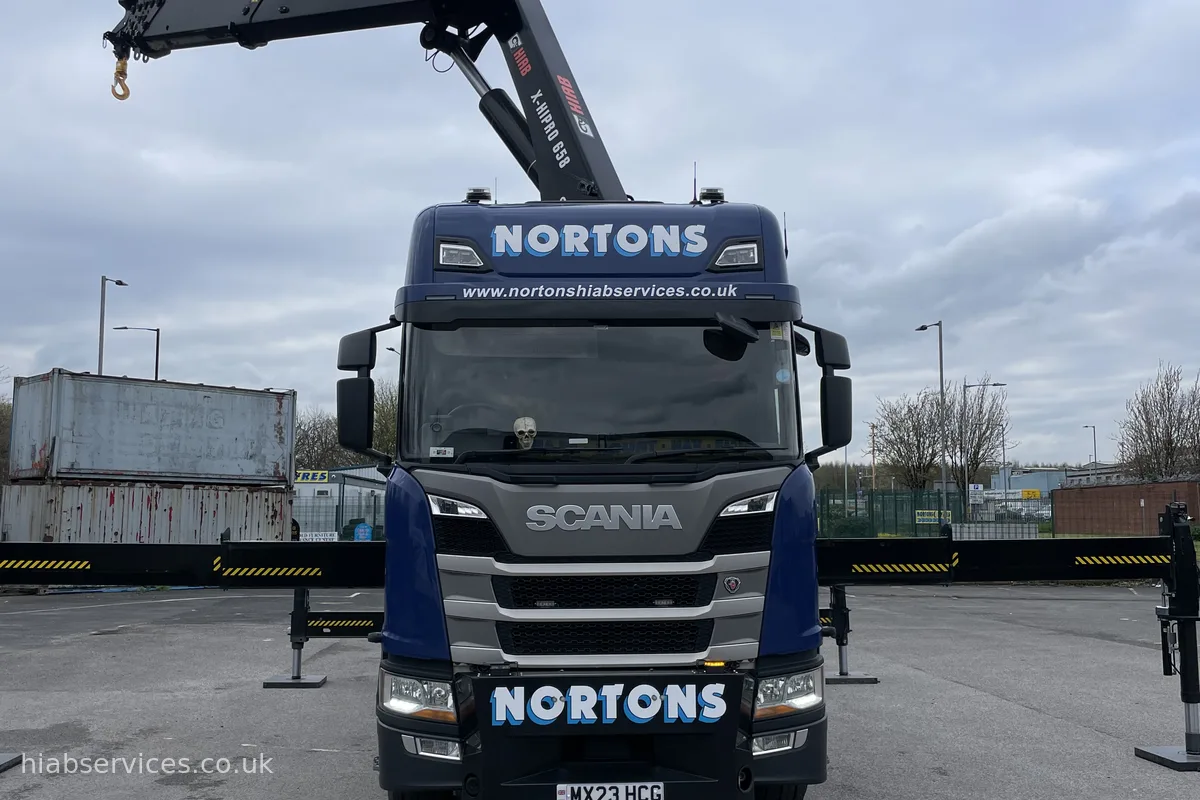
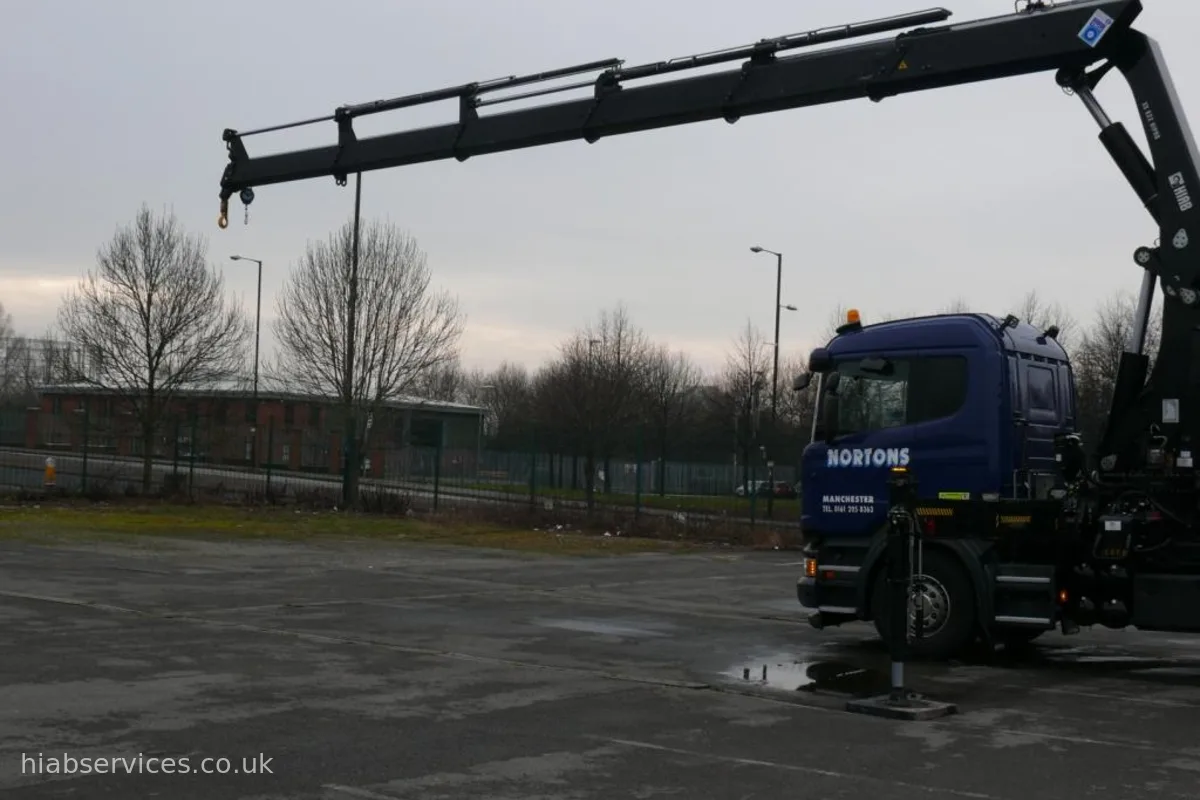
Working to recognised UK transport, lifting and safety standards — across England, Scotland and Wales.