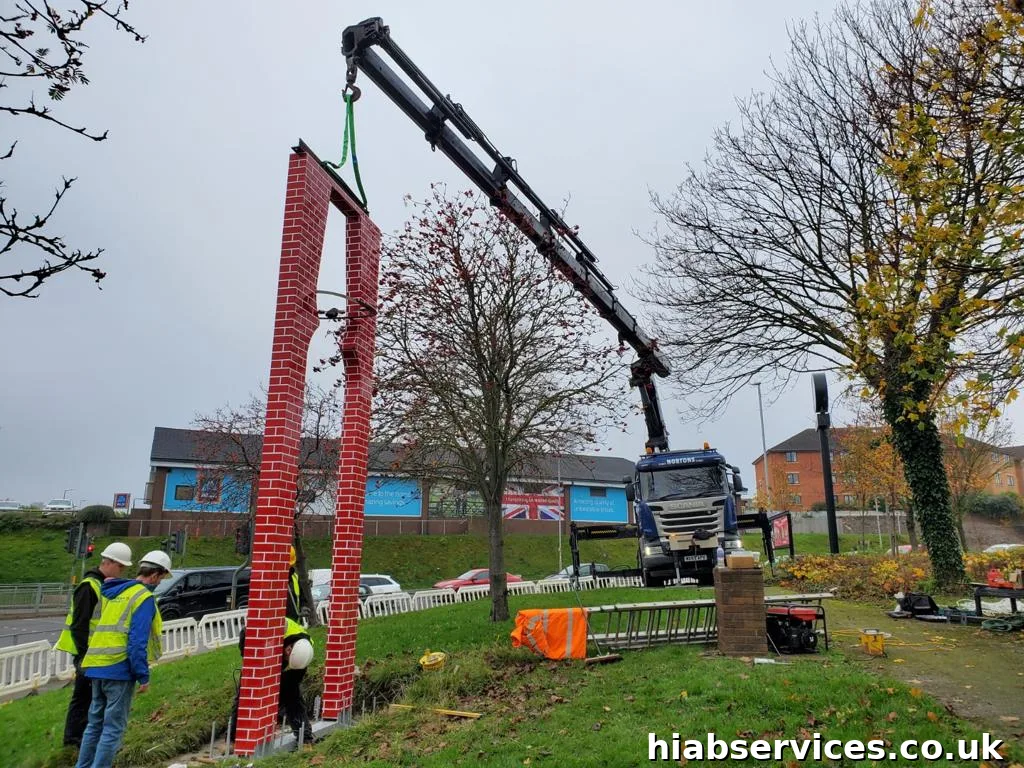
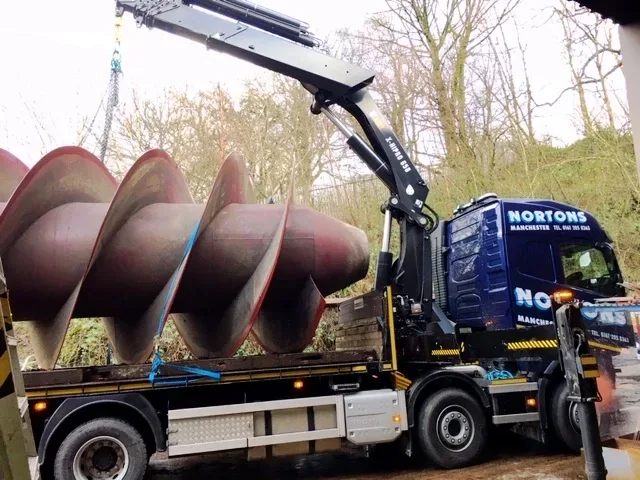
A HIAB truck is a lorry fitted with a hydraulic knuckle-boom crane — allowing it to load, carry and offload cargo without any extra lifting equipment at the delivery site. The boom folds compactly alongside the cab during transit and deploys within minutes on arrival.
The name comes from the Swedish company Hydrauliska Industri AB, which invented the lorry-mounted hydraulic crane in 1944. Today HIAB is a brand owned by Cargotec, and the word is used generically in the UK for any lorry-mounted lifting truck — whoever the actual manufacturer is.
It is a knuckle-boom design — so named because the arm folds at one or more points along its length, like a finger joint. That lets it extend outwards and fold back for stowing, reaching its operating radius through the main boom and one or more jib extensions. Power comes from the lorry's hydraulic system, driven by the engine via a power take-off (PTO) unit.
It sits on a slew ring that allows full 360-degree rotation. Outriggers deploy from the vehicle sides to stabilise it during lifting. Most modern trucks have radio remote controls, letting the operator walk around the load and keep a clear line of sight throughout the lift.
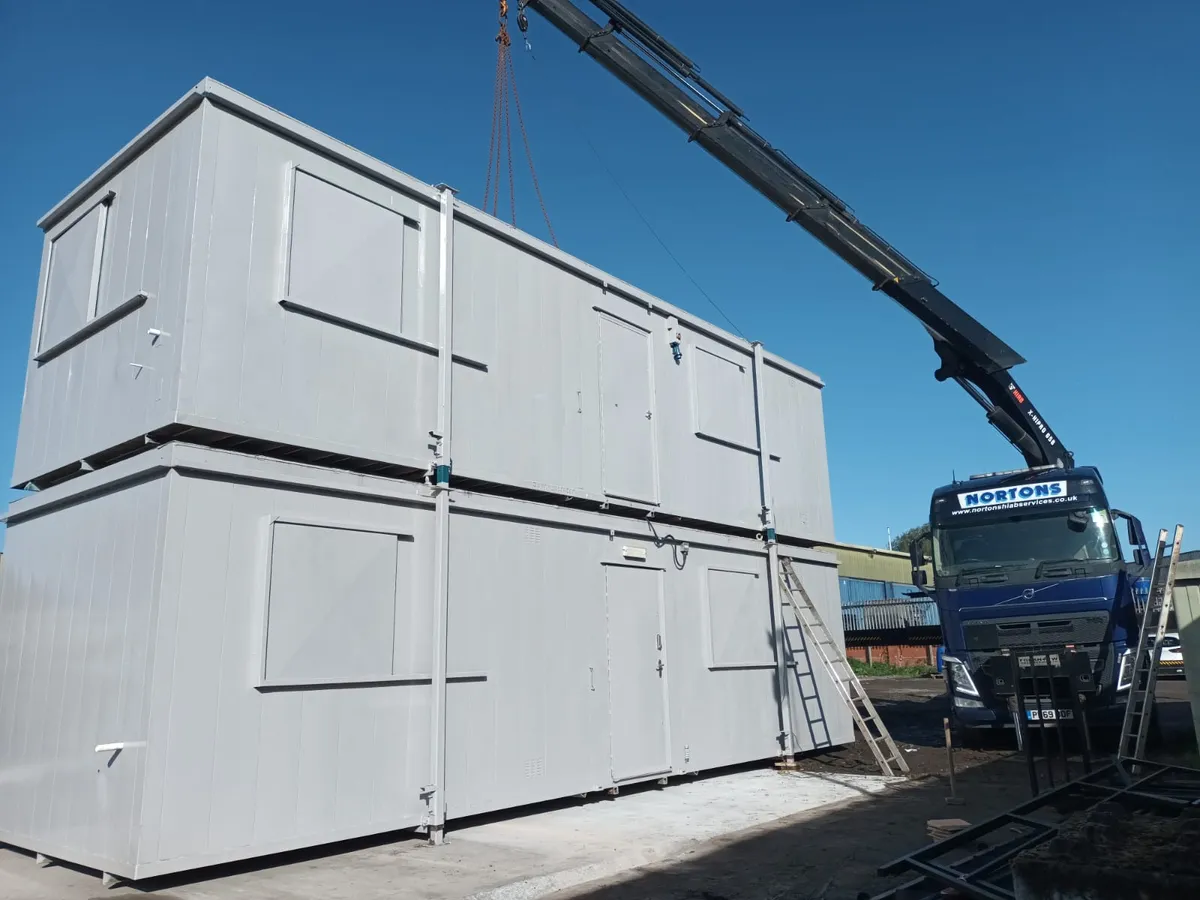
These trucks carry almost anything that needs to be moved and placed precisely at the delivery point. Common loads include structural steel — RSJs, columns, beams and roof trusses — construction materials such as block packs, concrete panels and aggregate bags, portable cabins, site offices and welfare units, containers, generators, transformers, compressors, HVAC units, signage gantries and specialist items including sculptures, swimming pools, hot tubs and industrial plant.
The defining feature is that the vehicle needs no forklift or separate lifting equipment at the delivery site — the crane is on the truck itself. That is why these vehicles are so widely used in construction, where sites often lack permanent lifting infrastructure.
They come in a range of configurations. Rigid trucks — typically 18 to 32 tonnes — are the most common and suit local and regional work. Articulated lorries (artics) operate at 44 tonnes and offer maximum payload for long-distance haulage with offloading built in. Wagon-and-drag configurations extend the load bed for long structural loads, while low loaders handle tall or exceptionally heavy equipment. Lift capacity ranges from the HIAB 558 — around 10 tonnes at minimum radius — up to the 855 and 858, which manage around 18 tonnes.
Weight limits, outreach and the types of loads these cranes handle across the UK.
Lift capacities for the 558, 658 and 858 — and how reach affects the numbers.
Crane size, vehicle configuration and the questions to ask before booking.
Working to recognised UK transport, lifting and safety standards — across England, Scotland and Wales.