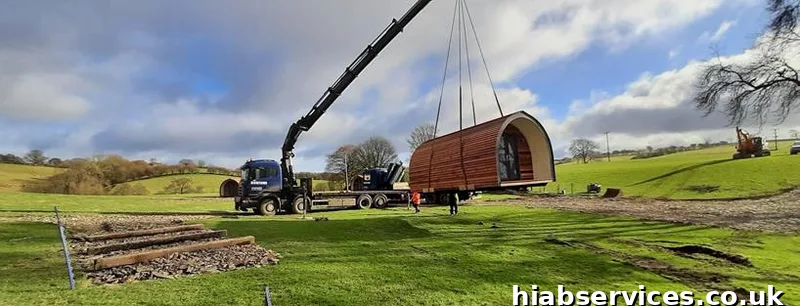
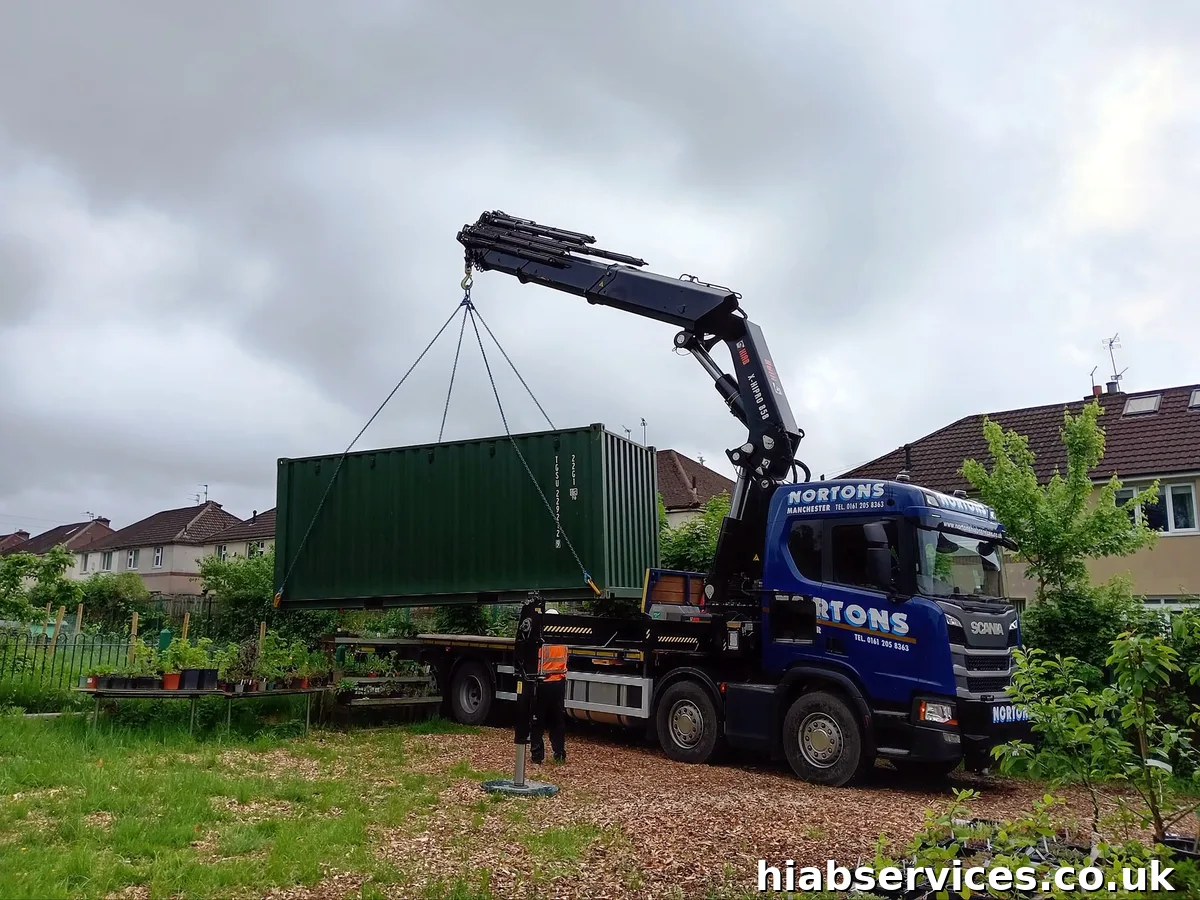
Moving portable cabins — whether single units, stacked two-high, or full modular buildings — is one of the most frequent tasks our HIAB fleet performs. Done well, it is a smooth, quick operation. Done poorly, it causes site delays and potential damage. Here is how to get it right.
Know Your Cabin Weight
Standard 20-foot site office cabins weigh approximately 2.5–3.5 tonnes depending on age, specification and fitted-out contents. Anti-vandal cabins are heavier due to steel construction. Always clear contents before the lift if possible — a cabin full of tools, files and kettles can add 500kg or more. Provide the cabin make and model if you have it so we can check specifications.
Access Assessment
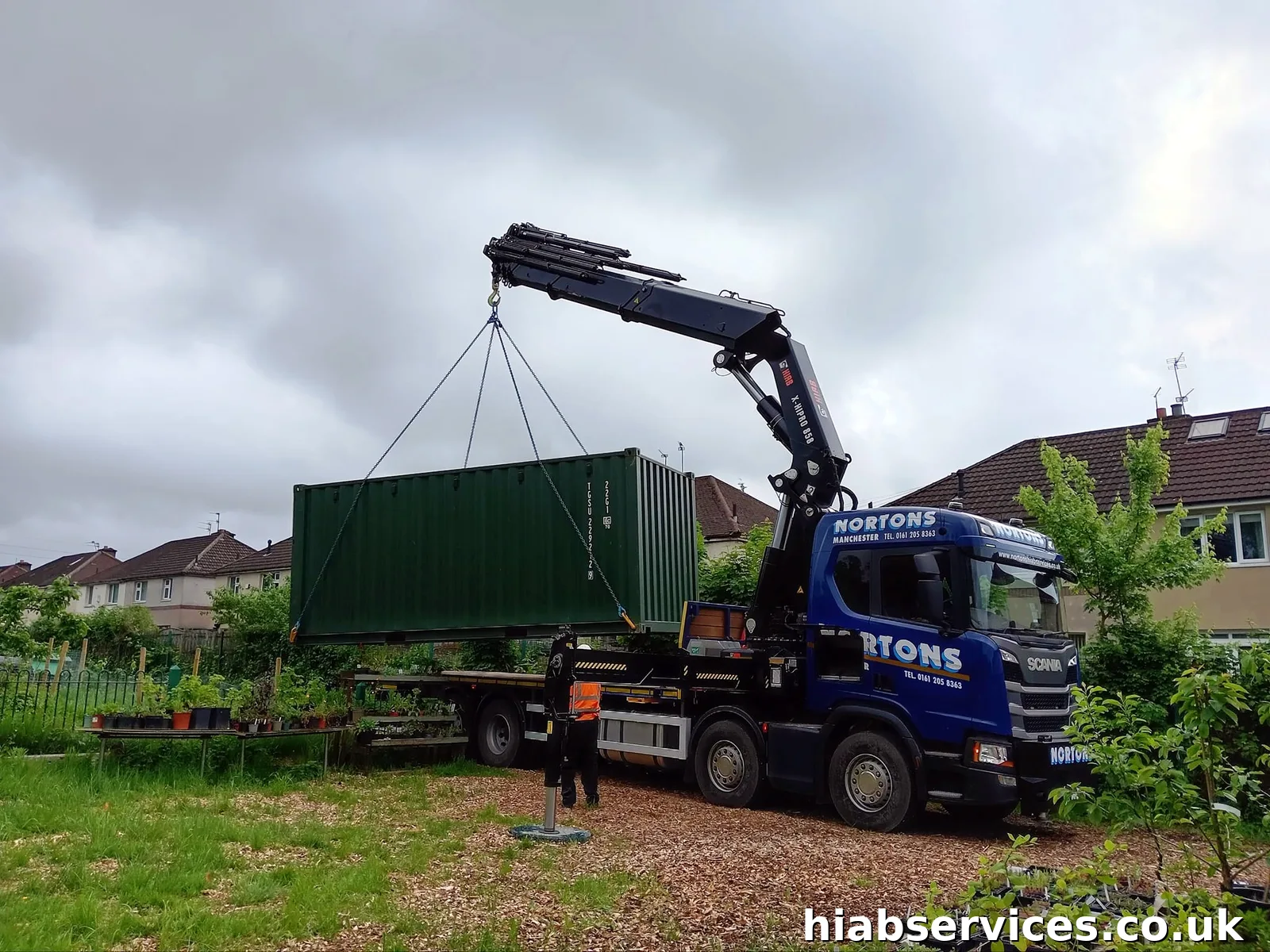
The vehicle needs to park close enough for the crane to reach the cabin's lift points, which are typically fixed lifting eyes on the roof frame. Note any overhead cables, fences, trees or structures between the vehicle position and the cabin. Our team will carry out a site survey for complex moves or ask you for photographs and measurements for straightforward single-unit moves.
Rigging
Cabins must be lifted from all four roof lifting eyes simultaneously using a spreader beam or certified four-leg chain sling. Lifting from fewer points risks distorting the frame or door seals, which can make the cabin impossible to re-open. Our operators carry appropriate rigging equipment as standard.
Stacking Cabins
Two-high stacking is standard on construction sites. The lower cabin must be on solid, level ground or purpose-made steel stillages. Stack legs align with the lower cabin's corner uprights. We will advise if ground conditions are unsuitable for stacking.
After Placement
Check all doors and windows open freely after placement — any distortion suggests the cabin is not perfectly level. Adjust with packers as needed before connecting services.
For portable cabin transport anywhere in the UK, call 0330 175 8197 or visit our portable cabin page.